Money Run 3D
- 4.4
- Rating
- 100.00M
- Installs
- Free
- Price

 Analysis by App-foxy
I spent time with Money Run 3D as a quick, casual racing game, and my first impression was that it is built for short bursts rather than long sessions. The central idea is easy to understand: guide a character through lively obstacle-course-style levels while trying to improve your financial position and reach the finish in better shape. It is a simple premise, but the combination of movement, timing, and visual choices gives each run a little more purpose than a completely automatic runner.
That simplicity is also what makes the game approachable. I did not need a long tutorial or a complicated control scheme before starting. The store summary presents it as a run toward wealth and discovery through many interesting levels, and that description matches the broad feel of the experience without explaining every moment. This is a free racing game from XGame Global, rated Teen, with a 4.4 average from around 346 thousand ratings. Its audience is clearly large, but popularity alone does not make it suitable for everyone, especially players who need careful control over pace, visual intensity, or spending.
How Money Run 3D communicates the course
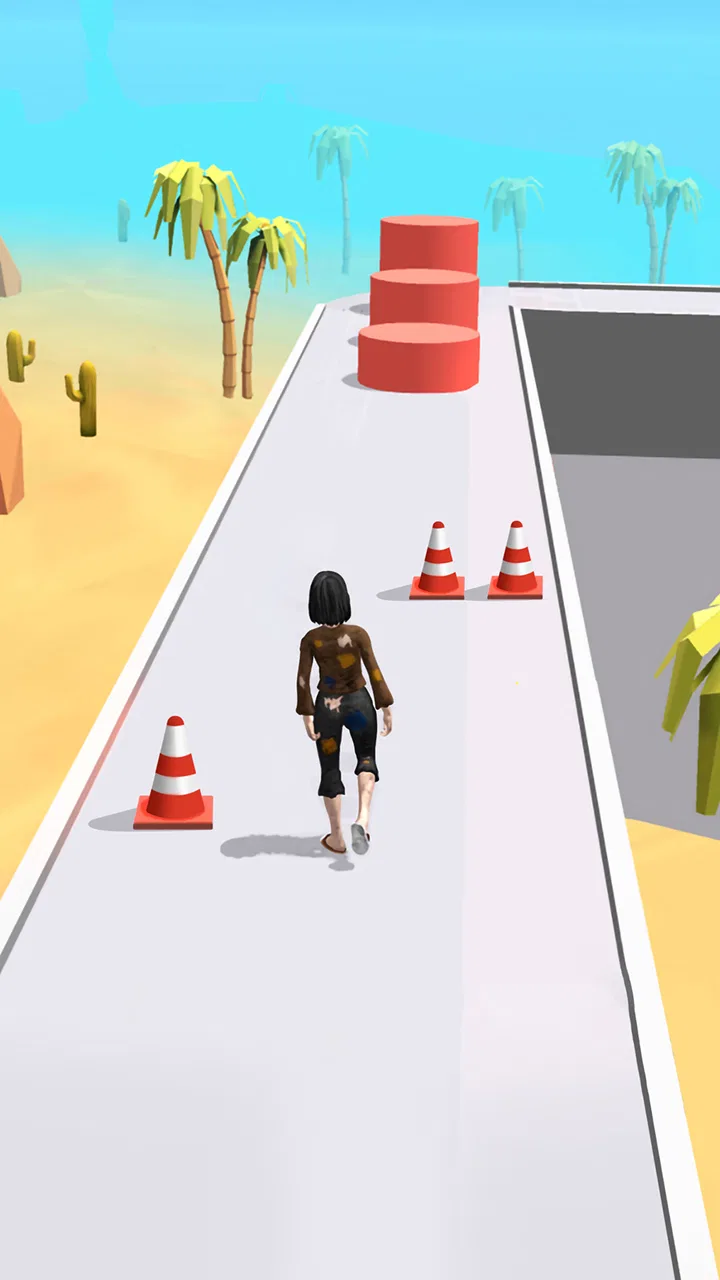
I focus here on how the course communicates its choices, because that visual guidance is what makes a quick run understandable without a long explanation. I’ll also look at where that clarity can break down, and how a small change in attention can make the next decision feel less rushed.
You May Also Like

 Pandora - Music & Podcasts
Pandora’s Music Is Easy to Start, but Harder to Recover
Pandora’s strength is its low-effort path from a seed to a station. Its weak spot is how much confidence it asks you to place in connection, setup, and quiet recovery.

 8 Ball Pool
 Is Built on Rivalries, Rematches, and Routine
A close look at the rivalries, rematches, shared routines, and unanswered safety questions that turn a quick pool match into a persistent mobile community.

 Samsung Music
’s Quiet Strength Is Playing What You Already Own
Its reach comes less from spectacle than from dependable access to a personal library. That simplicity is both the app’s strongest retention engine and its ceiling.

 AccuWeather: Weather Radar
AccuWeather Review: A Quick, Clear Forecast for Everyday Decisions
For everyday plans, the best forecast is the one you can understand quickly. AccuWeather makes rain timing, radar, and local conditions easy to act on, with a few trade-offs.

 Hill Climb Racing
Why Hill Climb Racing Still Turns Crashes Into One More Run
A tiny car, a bumpy hill and one more upgrade: Hill Climb Racing keeps resurfacing because its simple chaos makes every near-miss feel personal.

 AliExpress - Shopping App
AliExpress Makes Global Shopping Feel Personal, but Shoppers Bear the Risk
AliExpress turns a global marketplace into a pocket-sized discovery engine. Its reach is useful, its shopping loop compelling, and its trade-offs easy to miss.
More From Our News Desk
View All News


Readability and navigation during a run
The strongest part of the design is how quickly I can understand what matters on screen. The track, hazards, rewards, and finish direction are presented as immediate visual goals rather than buried behind menus. That matters in a game where a decision often has to be made while the character is already moving. I can look at the route, identify the safer or more profitable option, and act without stopping to interpret a complicated interface.
That does not mean every moment is effortless. The game’s bright, busy presentation can make the important object compete with decorative elements, particularly when several things appear close together. I found it easier to play when I focused on the next decision instead of trying to follow every animation. For a new player, the useful habit is to scan the path from the character outward and treat distant visual activity as background until it becomes relevant.
The navigation is especially friendly to people who prefer direct visual feedback. There is no need to memorize a large map or learn a set of racing lines before making progress. Each section gives me a local problem to solve. That structure suits someone who wants a game that can be understood while commuting, waiting for an appointment, or taking a short break.
At the same time, players who rely on very restrained interfaces may find the presentation tiring. Money Run 3D communicates through movement, color, position, and quick visual changes. If a player has difficulty distinguishing similar colors, processing a crowded scene, or tracking a moving character, the game may demand more effort than its simple rules suggest. I would not describe it as a deliberately minimal racing experience.
Menus, progression, and the learning curve
The basic progression is easy to enter because the game does not ask me to understand a deep collection of vehicle statistics or a complicated championship system before playing. That is a genuine advantage over traditional racing games, where the first few minutes can be spent comparing cars, tires, tracks, and upgrades. Here, the appeal is immediate action and the satisfaction of seeing how a run turns out.
My advice is to treat the opening attempts as practice rather than as tests of reflexes. The most useful information comes from observing how the character responds to a choice and which route produces a better result. That approach is more comfortable for players who need time to learn a game’s visual language. It also prevents the common mistake of reacting to every object at the last second.
There is a trade-off, though. Anyone looking for a clearly explained, long-term racing campaign may find the structure lightweight. The game’s accessibility comes partly from not overwhelming the player with systems, but that same restraint can leave experienced racing fans wanting more control and more strategic depth. I see it as a casual obstacle racer first, not as a substitute for a full driving simulator or a serious competitive racer.
Controls and motor demands
The physical demand is lower than in a game that requires several simultaneous buttons, but timing still matters. I had to make decisions while the run was in motion, so a player with limited precision, slower reaction time, hand tremors, or difficulty with rapid gestures may experience failures that are not caused by misunderstanding the objective. The rules are simple; the timing can still be unforgiving in the wrong moment.
For that reason, I would play with the phone held securely and use the finger that gives me the most reliable movement. A stable grip reduces accidental input, especially when playing one-handed. I also found that short sessions are better than trying to force progress after concentration has dropped. In a game based on repeated quick choices, fatigue can turn a manageable section into a frustrating one.
Money Run 3D is a better match for players who can comfortably follow a moving character and respond to changing paths. It is less suitable for someone seeking extensive motor-assistance options or a slow, turn-based alternative. I would not recommend assuming that a simple control layout automatically means low motor demand; the need to react at the right time remains part of the challenge.
Visual and sensory comfort
The colorful, animated style helps communicate the playful tone and makes the game feel active even when the underlying rules are straightforward. It also gives the player useful visual cues about routes and objects. However, bright movement and repeated visual changes can be demanding for people who are sensitive to motion or visual stimulation. I prefer lowering my own environmental distractions when playing, because a busy room combined with a busy screen makes concentration harder.
Sound can also affect comfort, even when the visual design is doing most of the communication. I often play casual games with the device muted or at a low volume, particularly in public places. That makes the experience more flexible for quiet environments and for players who do not want repeated game sounds competing with conversation or surrounding noise. The game remains understandable through its visual action, although players should still pay attention to whether muted play changes their personal sense of timing.
For players with color-vision differences, the practical test is whether the route and important objects remain distinguishable without depending on color alone. I would try a few early levels before committing to longer sessions. If the visual hierarchy is easy to follow, the game can remain comfortable; if every decision depends on separating similar shades while moving, the experience may become unnecessarily difficult.
Playing in different everyday situations
I find the game easiest to judge in the moments people actually have for it: a pause between errands, a quiet stretch at home, or a shared turn with a friend. Those situations bring out its convenience, but they also make the limits of a fast, visually active game easier to notice.
Short breaks and one-handed use
This is where the game makes the most sense to me. I can open it for a brief distraction without preparing a long session, learning a complex vehicle setup, or remembering a detailed story. A person waiting for a bus, taking a lunch break, or relaxing between tasks may appreciate that the objective is visible almost immediately.
One-handed play can be convenient, but it depends on the player’s grip and the phone’s size. A large device may make it harder to reach the useful area without shifting the hand. I would avoid playing while walking or doing anything else that requires attention, not because the game is unusually complicated, but because its quick decisions are enough to pull focus away from the surroundings.
It also works well as a shared, informal game. I can hand the phone to a friend and explain the basic goal in a few seconds. That makes it more approachable than a racing title that requires a controller, a long installation process, or a detailed explanation of vehicle tuning. The downside is that the simple format may not hold the attention of someone who wants a deep multiplayer competition or a realistic driving experience.
Age, spending, and household considerations
The game is free to download, which makes trying it low-risk from a purchase perspective. It carries a Teen content rating, so I would not treat it as automatically appropriate for young children simply because the controls are easy. Parents should make their own decision based on the child and the way the game is used, particularly if the device belongs to a family member and in-app purchases are enabled.
Optional purchases are listed at $1.99 per item. That is a small, clear figure, but repeated purchases can still matter in a household. I recommend checking device purchase controls before letting someone else play, especially if the player is likely to tap quickly through prompts. The free entry point is appealing, yet the spending boundary should be set outside the excitement of a run rather than during it.
The game has reached over 100 million installs, which tells me it is easy to discover and broadly appealing. Its current version is 3.1.51, and it requires Android 9 or newer. That requirement is important for anyone using an older phone or maintaining an older operating system for compatibility reasons. A game can be a good fit in every other way and still be unavailable on a device that does not meet the minimum system requirement.
Who will enjoy it and who should look elsewhere
I would recommend Money Run 3D to someone who likes casual racing with a playful obstacle-course feel, quick decisions, and an uncomplicated entry point. It is a good option for players who want something more interactive than an idle game but less demanding than a conventional racing simulator. It can also suit people who enjoy repeating short challenges to see whether a different choice produces a better outcome.
I would steer competitive racing fans toward a more traditional racer if they want precise steering, vehicle setup, lap strategy, or a strong sense of realistic speed. I would also suggest a slower puzzle game to anyone whose motor or sensory needs make rapid movement uncomfortable. The game’s accessibility comes from its understandable objective and relatively direct presentation, not from a broad collection of specialist accessibility settings.
Players who dislike free-to-play design should think about the purchase model before installing. The game costs nothing to start, but the presence of paid items may be a distraction for someone who wants a fully self-contained experience with no commercial prompts. Likewise, people who prefer quiet, low-stimulation games may be happier with a calmer title, even if they enjoy racing as a category.
Practical ways to make the experience easier
My first practical tip is to play in a stable position rather than holding the phone loosely while moving around. This is more than comfort advice: reliable grip makes small inputs more predictable and reduces the chance of reacting too late. My second tip is to watch the route ahead instead of staring only at the character. The next decision usually matters more than the obstacle currently underneath the character.
A third useful approach is to separate learning from score chasing. On an unfamiliar section, I pay attention to the route and the result of each choice instead of trying to produce a perfect run immediately. That makes the game more manageable for players who need a little extra processing time and helps reveal whether a problem comes from the course or from rushed input.
Finally, I would adjust the setting around the game rather than expecting the game to solve every comfort issue. A quieter room, a comfortable viewing distance, reduced device volume, and a short session can make a noticeable difference for someone sensitive to distraction. These changes do not alter the game itself, but they can determine whether its fast visual style feels playful or exhausting.
My inclusive verdict
Money Run 3D succeeds because it gives me an immediately understandable reason to keep moving: choose a route, avoid trouble, and try to finish with a better result. XGame Global has positioned it as a casual racing game rather than an elaborate simulation, and that focus makes it easy to recommend for short, low-commitment play. The large install base and solid 4.4 average suggest that the format has connected with many players, although those figures should not replace an individual accessibility check.
My overall view is positive but specific. The game supports different contexts well: it is quick to learn, suitable for short breaks, and less dependent on complex controls than many racing alternatives. It is not equally comfortable for every ability, however. Rapid visual decisions, moving scenes, and the need for timely input can create barriers for players with motor, visual, or sensory difficulties. The Teen rating and optional $1.99 purchases per item also make it worth considering the player’s age and household settings before handing over the device.
The best reason to try it is its low learning barrier; the main reason to skip it is the pressure of fast, visually busy decisions. If that balance fits what I want from a mobile game, Money Run 3D is an entertaining way to fill a few minutes. If I need careful accessibility controls, realistic racing depth, or a completely quiet and predictable experience, I would choose a different category or a more specialized racing option instead.
FAQs for Money Run 3D
01What is Money Run 3D, and how does it work?
Money Run 3D is an engaging mobile game where players navigate through a virtual world, collecting money and avoiding obstacles to reach the finish line. The game combines elements of strategy and reflexes, requiring players to make quick decisions to maximize their earnings while dodging challenges. It's available on both Android and iOS platforms.
02Are there any in-app purchases in Money Run 3D?
Yes, Money Run 3D includes in-app purchases. Players can buy coins or other enhancements to improve their gameplay experience. While the game is free to download, these purchases can help unlock new levels, skins, or power-ups, providing a more tailored and exciting gaming experience.
03Is Money Run 3D suitable for all ages?
Money Run 3D is designed to be fun and accessible for a wide age range. However, given its in-app purchase options and the need for quick reflexes, it may be more suitable for older children and adults. Parents should ensure younger players understand these aspects before playing.
04Does Money Run 3D require an internet connection to play?
Money Run 3D can be played offline, which makes it convenient for users who may not always have internet access. However, certain features, such as updates and in-app purchases, will require a connection to function properly. Playing online might also enhance the experience by providing access to leaderboards.
05How do the controls work in Money Run 3D?
The controls in Money Run 3D are intuitive and user-friendly, relying primarily on swiping and tapping on the screen. Players swipe left or right to navigate and tap to jump or perform actions. This simplicity allows players to focus on strategy and quick decision-making, enhancing the overall gaming experience.
Pros
- Engaging gameplay with simple controls.
- Bright
- colorful graphics enhance experience.
- Frequent updates with new levels added.
- Suitable for quick
- casual play sessions.
- Free to download with optional in-app purchases.
Cons
- Contains ads that can interrupt gameplay.
- Limited character customization options.
- In-app purchases can be expensive.
- Requires internet connection for some features.
- Repetitive gameplay may not suit everyone.

Money Run 3D
Gallery